

Introduction
What the Label Describes and What Chemistry Does
A food-safe label describes a material under specific, defined conditions. It says: this substance, tested at this temperature, in contact with this food type, for this duration, produced migration below a defined threshold. That is a real and meaningful piece of information. What it cannot account for is what happens when those conditions change, because chemistry does not consult the label.
Heat accelerates the movement of molecules across material boundaries. Fat dissolves compounds that water cannot. Acid reacts with surfaces in ways that neutral food does not. Duration matters because even low migration rates compound across hours. These are basic principles of chemistry that apply to every material in every kitchen regardless of what the packaging says. The sections below identify which specific products and conditions create the widest gap between what the label describes and what chemistry actually does.
Every claim here is sourced from peer-reviewed research, a documented regulatory position, or an established agency finding. Where the science is genuinely contested, that is stated clearly. The goal is a practical understanding of where the chemistry matters most, not an argument about whether products should be trusted.
How Labels Work
What Food-Safe Actually Means
In the US, the FDA regulates food contact materials through Title 21 of the Code of Federal Regulations (21 CFR). A material earns food contact approval through one of four routes: it is listed in 21 CFR as an approved indirect food additive; it qualifies as Generally Recognized as Safe (GRAS) based on expert consensus; it falls below a Threshold of Regulation because expected migration is under 0.5 parts per billion; or it has received a Food Contact Notification following pre-market review. The process involves real testing under real conditions and has prevented genuine harms. Understanding what those conditions specify is what makes the label useful rather than just reassuring.
FDA regulation 21 CFR 176.170 specifies conditions of use by food type and temperature. An approval is tied to those conditions. A material approved for cold beverage contact has not necessarily been assessed for hot liquid contact. A material approved for dry food is a different evaluation from fatty food contact. These distinctions are embedded in the regulatory record and are not prominently communicated on consumer packaging. The gap between approved conditions and actual conditions of use is where the chemistry becomes relevant, and it is the thread running through everything covered here.
The EU difference
When the EU reaches a different conclusion from the US on the same substance, it reflects a difference in how much uncertainty triggers precautionary action, not a difference in the underlying science. The European Food Safety Authority concluded in 2023 that BPA poses a risk to human health at dietary exposure levels and set a tolerable daily intake 20,000 times lower than its previous guideline. The FDA, reviewing the same body of literature, maintained in 2023 that BPA is safe at current exposure levels. Where the EU has restricted a substance still permitted in the US, that divergence is worth noting as a practical benchmark.
Food Contact & Kitchen
Daily Kitchen Items and the Conditions That Matter

Most of the items in this section are things you already own and reach for without much thought. For each one, the concern is rarely the material itself under ideal conditions. It is the specific conditions of ordinary use that change how it behaves. A container that is perfectly stable holding cold leftovers can act differently once it is heated, filled with something acidic, or scratched from years of washing up, and those everyday shifts are where the real questions come up. Sorting the genuinely inert materials from the conditional ones is most of what this section is for. What matters here is less the material itself and more a handful of specific habits that the label alone doesn't capture.
Heat, fat content, acidity, scratching, and the length of time food stays in contact all affect what migrates from a surface into what you eat, and each one shifts the chemistry in its own way. They rarely act alone, either; a hot, oily sauce left sitting in a scratched plastic tub brings several into play at once. The microwave is the clearest case: one study measuring particle release found that microwaving certain plastic containers drove them to shed millions of microplastic and billions of nanoplastic particles per square centimetre in a few minutes, far more than refrigeration or storage, and heating an acidic food raised the release further. Approvals are granted under defined conditions, tested at set temperatures against set food types, and how closely those match the way something actually gets used at home is not always clear. This section stays with the chemistry and the conditions; for a material-by-material look at the items themselves, from plastics and cookware to cutting boards, dinnerware, and cans, along with what to reach for instead, see the food-contact section on the companion Natural Home Care.
Slow cooker liners are made from polyethylene, typically LDPE or LLDPE, which holds food contact approval under 21 CFR. The chemistry concern is the combination of conditions involved in actual use: temperatures of 80 to 95°C sustained for four to ten hours, in direct contact with fatty, high-protein food. Heat and fat are the two variables that most significantly accelerate molecular migration across plastic surfaces, and slow cooking maximizes both simultaneously for longer than virtually any other domestic food preparation method. The material approval applies to defined conditions of use; whether this specific combination falls within those conditions is not documented in publicly available testing. A brief soak handles slow cooker cleanup without a liner, which makes this one of the simpler substitutions on the page.
The FDA's microwave-safe designation means a container will not warp, melt, or physically degrade under microwave conditions. It is a physical stability assessment rather than a chemical migration assessment under those same conditions. Polystyrene foam containers are the most documented concern; the FDA's own materials note that polystyrene may melt in contact with hot or fatty food and that migration is a documented concern. For non-foam plastics, the combination of microwave heat and fatty food increases the potential for molecular migration compared to a cold, dry food application. Glass and ceramic are genuinely inert under microwave conditions and are the practical alternatives.
BPA has been used in the epoxy resin lining inside food cans since the 1960s. The lining prevents metal corrosion and bacterial contamination, which is functionally important. The chemistry concern is that BPA is a bisphenol compound with documented endocrine-disrupting activity, and it migrates from the epoxy coating into food most significantly from acidic foods like tomatoes, citrus products, and beans, and at higher rates with longer storage and elevated temperature. The FDA currently considers BPA safe at current dietary exposure levels. The European Food Safety Authority reached the opposite conclusion in 2023 and the EU enacted restrictions on BPA in food contact materials in 2024. For acidic foods consumed regularly, fresh, frozen, or glass-packaged alternatives reduce this exposure pathway most directly. Where BPA-free cans are used, the substitutes BPS and BPF are structurally similar bisphenols that early research suggests carry comparable endocrine activity.
Modern K-Cup pods are made from polypropylene (code 5), which is BPA-free and holds food contact approval. The chemistry of the brewing process is the relevant variable: machines force pressurized hot water at approximately 89°C through a small plastic pod, maximizing both surface area contact and temperature simultaneously. A 2025 study in Science of the Total Environment found that single-use coffee pods released billions of microplastic and nanoplastic particles per cup under these conditions. A separate study in Toxicology Reports detected five estrogenic chemicals in capsule coffee samples. BPA substitutes BPS and BPF have been detected in pod-brewed coffee, and early research suggests these compounds have similar endocrine-disrupting properties to BPA. For people using pod machines multiple times daily over years, cumulative exposure is the relevant consideration. Glass pour-over, ceramic drip, stainless French press, and machines with minimal plastic in the water path reduce this exposure substantially.
Microwave popcorn bags use a susceptor film to generate localized heat and a grease-resistant interior coating. Research has detected PFAS (Per- and Polyfluoroalkyl Substances) compounds, including PFOA, in microwave popcorn bag coatings at concentrations up to 300 micrograms per kilogram. PFOA is associated with kidney and testicular cancer, thyroid disease, immune disruption, and developmental effects. Under EPA pressure, major US manufacturers phased out PFOA production by 2015 and the FDA prohibited specific perfluoroalkyl ethyl food contact substances in January 2016. PFAS as a class comprises over 12,000 compounds and the phase-out addressed specific long-chain varieties. Shorter-chain replacements introduced subsequently have demonstrated their own persistence and accumulation in biological tissue, with ongoing research into their toxicological profile. Stovetop popcorn in a covered pot with a small amount of oil requires no coated packaging and costs considerably less per serving.
Boiling water at 100°C represents the upper temperature limit for domestic plastic contact, well beyond the conditions under which most food contact polymers are assessed. Studies on hot beverage containers consistently find that migration increases substantially at temperatures above 70°C. The interior plastic surfaces of most kettles and the plastic components in the water path of drip coffee machines and hot water dispensers contact water at or near boiling for extended periods during each cycle. Most carry food contact approval based on the base polymer, and whether the specific act of repeatedly boiling water in a plastic vessel has been independently assessed for migration at point of use is not documented in publicly available regulatory records. Stainless steel and glass kettles eliminate plastic contact from this daily exposure entirely and are available across a wide range of price points.
Cookware
Non-Stick Coatings and the Conditions That Change the Chemistry
Cookware is where the two conditions that matter most, high heat and physical wear, tend to show up together. A pan exists to get hot, and over a normal life in the kitchen it also takes knocks, scratches, and the occasional overheating. That combination is what makes the coating the part worth understanding, so this section starts with non-stick and the specific points at which heat or damage change how it behaves.


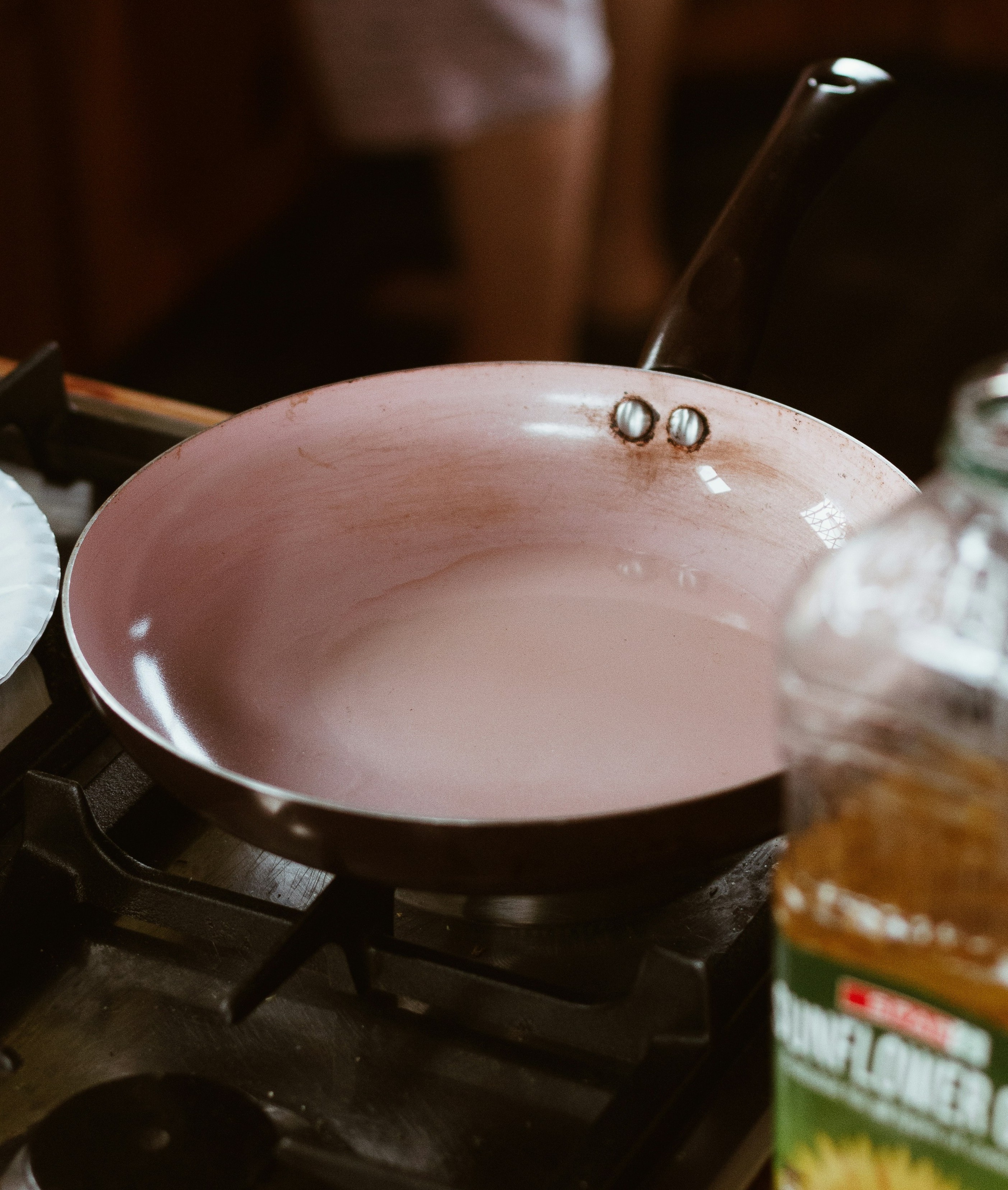

PTFE coatings are stable up to approximately 260°C (500°F). Above this temperature the polymer begins to decompose, releasing fluorinated gases that cause polymer fume fever in humans, characterized by fever, chills, headache, chest tightness, and respiratory distress, and are acutely lethal to birds whose respiratory systems are far more sensitive. Texas A&M's Veterinary Medical Diagnostic Laboratory has documented PTFE toxicosis in birds from overheated non-stick cookware, describing severe lung oedema and haemorrhage. An empty non-stick pan on a high burner can reach 260°C in two to five minutes. The condition known informally as Teflon flu is believed to affect hundreds of people annually in the US, with significant underreporting because the symptoms resemble common illness and few people identify cookware as the source. Cooking on medium heat and never preheating an empty non-stick pan are the two practices that keep PTFE within its stable temperature range.
Research published in Science of the Total Environment by Dr. Cheng Fang of the University of Newcastle found that a single scratch on a PTFE-coated pan can release approximately 9,100 microplastic and nanoplastic particles. The structural integrity of the coating is what makes it stable; once damaged, particles of the polymer itself enter food directly. PTFE microplastics have been detected in human urine and semen and are associated with reduced sperm counts, though the clinical significance of this finding and direction of causation are still being studied. Consumer Reports testing found that PTFE pans labelled as PFOA-free still contained measurable PFOA and other PFAS, because PFOA is used in the manufacturing process and is difficult to fully eliminate from the finished coating. Any scratched, flaking, or heavily worn non-stick pan should be replaced. Metal utensils and abrasive cleaning accelerate this damage.
PFOA (perfluorooctanoic acid) was used as a processing aid in PTFE manufacture for decades and is associated with kidney and testicular cancer, thyroid disease, high cholesterol, immune suppression, and developmental effects. Under EPA pressure, major manufacturers voluntarily phased out PFOA production by 2015. An estimated 80% of environmental PFOA comes from PTFE manufacturing, and it has contaminated water supplies near production facilities. Pans manufactured before 2013 should be assumed to contain PFOA. The PFOA-free label on modern cookware means PFOA was not intentionally added during manufacture, not that the pan is free of all PFAS compounds. Consumer Reports testing confirmed PFOA residues in PFOA-free labelled products because of the difficulty of fully eliminating it from the production environment.
Ceramic non-stick coatings from brands including Our Place, Caraway, and GreenPan have been independently tested by Consumer Reports and found to contain none of the 96 PFAS compounds assessed. They contain no PTFE. The practical limitation is durability: ceramic coatings lose non-stick performance faster than PTFE, typically within one to three years of regular use, and a scratched or chipped ceramic surface exposes the underlying aluminum base. For long-term cookware without any coating concern, cast iron and stainless steel have no polymer surface to degrade, require no replacement schedule, and have decades of documented safe use across all cooking temperatures and conditions.
Building & Home
Materials in the Structure and Furnishings Around You
The materials in this section are not ones you handle or eat from, but they share your air for years at a time. Furniture, flooring, insulation, and the treatments applied to them can release compounds slowly into the home long after they are installed, which is a different kind of exposure from the brief contact of a food container. The concern here is less about any single item and more about what builds up in indoor air over time, and about how little of it has to appear on a label.
Polybrominated diphenyl ethers (PBDEs) were the dominant flame retardant class used in upholstered furniture, mattresses, and electronics from the 1970s until they were phased out in the US between 2004 and 2013. PBDEs are persistent bioaccumulative toxins linked to thyroid disruption, neurodevelopmental effects, reproductive harm, and cancer. They are now measurable in virtually all Americans' blood and breast milk as a consequence of decades of environmental accumulation. Organophosphate flame retardants replaced PBDEs across much of the market and emerging research is raising neurotoxicity and endocrine concerns about this class as well. Neither the chemicals used in furniture flame retardant treatment nor their quantity is required to be disclosed on consumer labels. California's TB117-2013 standard has shifted some of the market toward non-chemical flame resistance achieved through tighter fabric construction and fire barrier layers rather than chemical treatment. Asking manufacturers specifically which flame retardant approach a product uses, and requesting a disclosure letter, is currently the most direct way to get this information before purchase.
Paint sold in the US requires VOC (Volatile Organic Compound) content disclosure on the label by law in most states. The same requirement does not apply to finished furniture. A sofa, bedroom set, or kitchen cabinet installation can arrive in the home off-gassing formaldehyde from engineered wood substrates, volatile compounds from solvent-based lacquers, and flame retardant compounds from foam and fabric, with no required disclosure of any of these. The chemical load is highest in the weeks immediately following delivery and is more significant in poorly ventilated spaces. A new bedroom with a bed frame, mattress, and wardrobe presents a compounding exposure for whoever sleeps in it for eight hours nightly. Ventilating rooms aggressively after new furniture delivery, using a HEPA and activated carbon air purifier during the first weeks, and allowing mattresses to off-gas in a ventilated space before use are practical mitigations. GREENGUARD Gold certification on furniture and mattresses verifies that VOC emissions meet independently assessed thresholds.
Vinyl flooring is made from PVC with phthalate plasticizers added to create flexibility. Phthalates are endocrine-disrupting compounds associated with developmental effects in children, reproductive harm, and metabolic disruption. Research has found that children crawling on vinyl floors have measurably higher phthalate body burden than children in homes with hard flooring. Individual phthalate concentrations are regulated, but the regulatory assessment does not account for whole-home installation across hundreds of square metres of continuously off-gassing surface. The EU applies stricter phthalate restrictions than the US. FloorScore and GREENGUARD Gold certification indicate lower emissions but do not eliminate the underlying PVC and phthalate concern. Solid hardwood, natural linoleum (Marmoleum), ceramic tile, and cork are alternatives without phthalate chemistry.
Spray polyurethane foam contains methylene diphenyl diisocyanate (MDI) as one of its two reactive components. NIOSH and the EPA have both identified diisocyanates as capable of causing occupational asthma and respiratory sensitization, and the EPA's Safer Choice program excludes isocyanates from its approved ingredient list. The specific concern for homeowners is the curing period: SPF off-gasses during and after application, and different contractors give conflicting guidance on safe re-occupancy timing. No federal agency has established a mandatory minimum re-occupancy period. Improperly mixed SPF, where the two components are combined at incorrect ratios or incorrect temperatures, can result in incompletely cured material that continues to off-gas indefinitely, with no way to verify full cure without testing. Dense-pack cellulose insulation with air barrier tape and formaldehyde-free mineral wool can achieve comparable air sealing performance without isocyanate chemistry.
Stain-resistant carpet treatments across the synthetic carpet category are predominantly fluoropolymer-based, meaning they contain PFAS compounds. These treatments are not required to be disclosed to consumers. PFAS from carpet treatments transfer into house dust, where they are ingested and inhaled, with children playing at floor level receiving proportionally higher exposure. The CDC's National Biomonitoring Program has found PFAS in the blood of virtually all Americans tested, and household dust in carpeted homes has been identified as a significant exposure pathway. The Carpet and Rug Institute's Green Label Plus certification, which is widely cited as the carpet industry's environmental standard, covers VOC emissions from carpet and adhesives. It does not test for or restrict PFAS treatments. Several states including California and Minnesota have enacted PFAS restrictions on carpets; federal restrictions do not yet exist. Wool carpet from manufacturers who do not apply PFAS treatment, and hard flooring alternatives, are the practical options.
Personal Care
Products Applied Daily to Skin and Inhaled in the Air

Personal care products sit in a different regulatory category from food and drugs, and the rules governing them are looser than the labeling might suggest. In the EU, over 1,300 chemicals are banned or restricted for use in cosmetics, while in the US that number is 11. The gap is not because European skin is more sensitive; it reflects a different burden of proof and a different view of how much uncertainty should trigger precautionary action. In practice it means a US label can be accurate and incomplete at the same time, listing what the law requires while leaving out a good deal that it does not.
These are products applied directly to skin, and often breathed in as vapor or spray, several times a day across a lifetime, which is what makes the disclosure question worth understanding. The aim here is to give you a clear view of what you are choosing between. Skin is not a perfect barrier; some of what goes on it is absorbed rather than simply sitting on the surface, and what is inhaled bypasses the skin altogether. A single product is rarely the issue on its own; it is the steady, repeated exposure across dozens of them that adds up over years, and it is why the routine as a whole matters more than any one item in it. There is direct evidence that it matters: when a group of teenagers switched, for just three days, to products labelled free of phthalates, parabens, triclosan, and certain UV filters, the levels of those chemicals measured in their bodies fell significantly, one common phthalate marker by more than a quarter. Knowing what is and is not required to appear on a label, and under what conditions, is the starting point for making informed choices about what goes on your skin every day.
The word "fragrance" or "parfum" on an ingredient list legally represents any combination of hundreds of undisclosed chemical compounds, protected as trade secrets under the Fair Packaging and Labeling Act. The International Fragrance Association maintains a voluntary list of over 3,000 materials used in fragrance, including substances restricted or banned in the EU on safety grounds. Fragrance compounds documented in product testing include phthalates, which must be individually disclosed if added for any other purpose, benzene derivatives, and synthetic musks that accumulate in biological tissue. Cleaning products present a higher concern than leave-on personal care because they aerosolize during use, creating direct and sustained inhalation exposure. Fragrance-free and unscented are not the same thing: unscented products may contain masking fragrance to neutralize the smell of other ingredients, and these masking compounds are equally undisclosed. Products labelled fragrance-free with full ingredient disclosure are the only reliable way to know what you are being exposed to.
The FDA regulates sunscreen as an over-the-counter drug, requiring UV filters to be approved active ingredients. The FDA's sunscreen regulatory framework was last substantively updated in 1999. Of the sixteen UV filter ingredients used in US sunscreens, only two have been categorized by the FDA as generally recognized as safe and effective: zinc oxide and titanium dioxide, both mineral filters. The remaining fourteen synthetic organic UV filters are in regulatory limbo, with the FDA stating it needs more data before confirming their safety while permitting their continued sale. The EU has banned or restricted oxybenzone, octinoxate, and several other UV filters used in US sunscreens, citing endocrine disruption and environmental toxicity. FDA-funded research published in JAMA in 2019 found that several common sunscreen chemicals were absorbed into the bloodstream at concentrations exceeding FDA safety thresholds after a single day's application, though the clinical significance of this finding is still being studied. Mineral sunscreens using zinc oxide or titanium dioxide are the highest-certainty option under current evidence.
Perchloroethylene (PERC) is used by approximately 60 to 65% of US dry cleaners as their primary solvent, making it still the most common dry cleaning chemical despite a declining share. The EPA classifies it as a probable human carcinogen under its Guidelines for Carcinogen Risk Assessment, and the California Office of Environmental Health Hazard Assessment classifies it as a known carcinogen. PERC off-gasses from dry-cleaned garments returned in plastic bags. Removing plastic bags immediately and allowing garments to air outdoors before bringing them indoors reduces this exposure. California phased PERC out of dry cleaning facilities by 2023. Wet cleaning (professional water-based cleaning), liquid CO2 cleaning, and liquid silicone cleaning are alternatives. When choosing a dry cleaner, asking specifically whether they use PERC and seeking PERC-free alternatives is the most direct step.
Triclosan was used in consumer antibacterial products from the 1970s onward. The FDA banned it and 18 other antimicrobial ingredients from consumer hand soap in 2016, finding that manufacturers had not demonstrated these ingredients were more effective than plain soap and water and that concerns existed around bacterial resistance, endocrine disruption, and developmental effects. The documentation of those concerns and the regulatory action were separated by over a decade during which triclosan remained in widespread use. It remains permitted in some other product categories. The triclosan example is less a story about a bad product than an illustration of how long the cycle from documented concern to regulatory response typically runs, which is relevant context for other substances currently in that intermediate period.
Children
Where Exposure Is Proportionally Highest
Children come up as their own category because the same home does not reach them the same way it reaches an adult. What is a minor exposure at adult body weight can be a more significant one for a small child, and the everyday objects involved, from feeding items to play mats, sleepwear, and car seats, are ones they stay in close and constant contact with. This section gathers those cases together rather than scattering them through the earlier material categories, since the reasoning behind each choice is much the same.
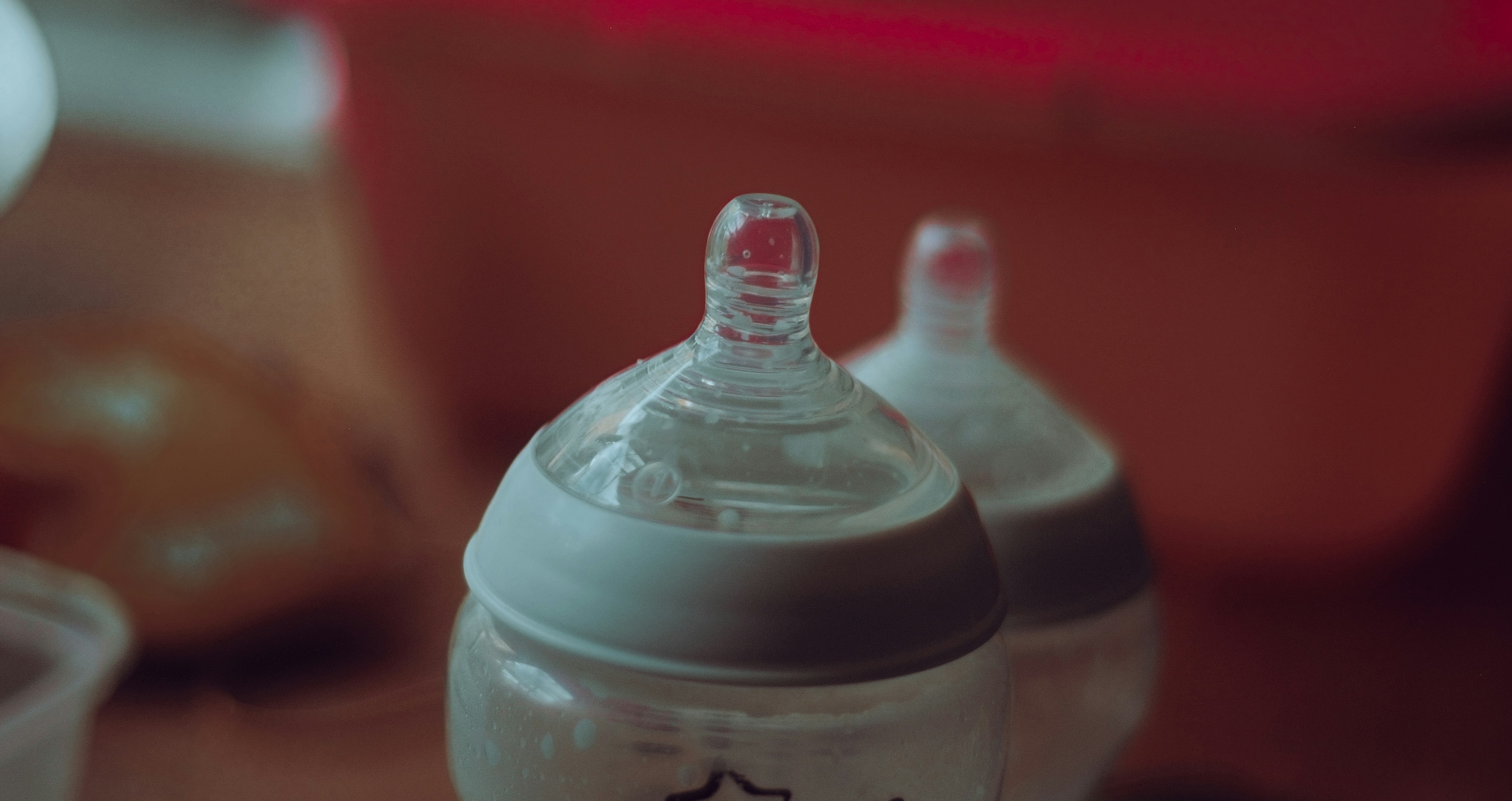
The FDA banned BPA from baby bottles and sippy cups in 2012, following major manufacturers who had already voluntarily removed BPA in response to consumer pressure. The substitutes introduced in response, primarily BPS and BPF, are structurally similar to BPA and were brought to market without the same depth of safety research that ultimately established BPA's risks. Early research on BPS and BPF indicates they have comparable endocrine-disrupting activity to BPA at similar concentrations. Whether replacing one bisphenol with a structurally similar compound represents a meaningful safety improvement is an open question in the current literature. Glass baby bottles eliminate the bisphenol question from this specific exposure pathway. Stainless steel is the practical alternative where shatter resistance is needed.
Ethylene vinyl acetate foam, used in interlocking play mat tiles, can contain formamide, a chemical used in the manufacturing process as a blowing agent. Formamide is classified as a reproductive toxin (Category 1B) under EU REACH regulation and is restricted in children's products sold in the EU. Belgium, France, and Spain withdrew EVA foam play mats from sale citing formamide migration concerns. Testing of products on the US market has found variable formamide content, with some products containing it and others not. Without a federal standard in the US, the presence of a product on the market does not indicate it has been assessed for this specific compound. Natural rubber play mats, untreated cork tiles, and wool rugs are alternatives that do not raise this concern.
US federal law requires children's sleepwear in sizes 9 months through 14 years to meet flammability standards. This is achieved through one of two routes: the garment is made from flame-resistant synthetic fabric, typically treated with chemical flame retardants, or it is labelled as snug-fitting, which reduces the air-to-fabric ratio that enables ignition without chemical treatment. The specific flame retardant chemicals used in treated synthetic pajamas are not required to be disclosed on labels. Following the PBDE phase-out, organophosphate flame retardants became common replacements and emerging research is raising neurodevelopmental and endocrine concerns about this class. Snug-fitting 100% cotton pajamas avoid chemical treatment entirely. These must be close-fitting to meet the standard, and cotton is a lower-concern fabric for a garment worn against skin for ten to twelve hours nightly.
Car seat foam and fabric are subject to flammability requirements under Federal Motor Vehicle Safety Standard 302. Research by the Ecology Center and Duke University found flame retardant chemicals, including chlorinated tris (TDCPP, a probable carcinogen) and organophosphate flame retardants, in the foam and fabric of a substantial proportion of car seats tested. Children are in direct skin contact with these materials for extended periods, and flame retardant compounds transfer to hands and are ingested through hand-to-mouth activity. Manufacturers are not required to disclose which flame retardants are used. The Ecology Center's HealthyStuff.org database publishes comparative data on specific car seat models tested for flame retardant chemicals and is the most practical resource for making an informed choice before purchase.
Water
What Comes Through Pipes and Hoses
Water picks up something of whatever it touches on the way to you, and the last stretch of that journey is the plumbing and hoses in and around your home. Those materials are easy to forget because they sit inside walls or coiled up in the garden, but water rests against them, sometimes for hours at a time. This section covers what can move from a pipe or hose into the water itself, which conditions make it more likely, and how filtration standards address it.
PVC is the dominant material for cold water supply and drainage in residential construction. CPVC (chlorinated PVC) is used for hot water supply lines. Both contain phthalate plasticizers and other additives. Research published in Environmental Science and Technology has found phthalates leaching from PVC pipe into drinking water at detectable concentrations, with migration proportional to water temperature, pipe age, and the amount of time water sits stagnant in the pipe. Hot water leaches more than cold. Water sitting overnight in PVC pipe has higher compound concentrations than freshly flowing water. Running the cold tap for thirty to sixty seconds before drawing water for drinking or cooking, particularly in the morning, reduces this exposure from any plastic plumbing system. PEX piping has its own leaching concerns at high temperatures but is generally lower concern for phthalates specifically than PVC.
Garden hoses are not regulated as drinking water contact products and are not manufactured to the standards applied to indoor plumbing. Ecology Center testing has found lead, BPA, and phthalates in water that has sat in standard garden hoses, with lead in some samples exceeding EPA drinking water standards. Lead stabilizers are used in the manufacture of some PVC hoses. The concern is concentrated in water that has been sitting in a hose exposed to sun, where elevated temperature significantly accelerates leaching. This water should not be used for drinking, filling animal bowls, or watering edible plants where it contacts the edible portions. Hoses labelled as drinking water safe are manufactured to NSF/ANSI 61 standard, which restricts lead, BPA, and phthalate content. These are available at most garden centers and hardware stores.
NSF International certifications are the most meaningful independent standard for residential water filters. NSF 42 covers aesthetic contaminants including taste, odor, and chlorine. NSF 53 covers health-related contaminants including lead, cysts, and VOCs. NSF 58 covers reverse osmosis systems. NSF 401 covers emerging contaminants including PFAS and pharmaceuticals. NSF certification is voluntary, so a manufacturer can claim their filter removes a wide range of contaminants without independent verification of that claim. Certifications are also contaminant-specific: a filter certified under NSF 42 for chlorine reduction has not been tested for lead, PFAS, or microplastics, and the NSF 42 certification does not extend to those contaminants. The practical approach is to obtain your municipal water quality report from your water utility, identify the specific contaminants present, and then select a filter with NSF certification specifically covering those contaminants. NSF publishes a searchable database of certified products at nsf.org.
What To Do
Applying the Chemistry Practically
The thread through every category here is the same: inert materials behave consistently regardless of temperature, duration, or food type, while materials with additives, coatings, or reactive chemistry behave differently depending on conditions. Identifying the conditions in your own kitchen and home that maximize those variables is the most useful thing to take away.
- Heat, fat, acid, and duration drive migration. Any food contact material becomes more chemically active when these conditions are combined. A heated container with fatty, acidic food sitting in it for hours maximizes all four simultaneously. Identify those specific use cases first and substitute there before anywhere else.
- Inert materials are available and practical. Glass, stainless steel, cast iron, ceramic, solid wood, and natural stone do not have additives that migrate, coatings that degrade, or reactive chemistry that changes with temperature. They cost more upfront and last proportionally longer. Replacing the highest-concern daily items with inert alternatives over time is more effective than trying to address everything at once.
- Children's environments are worth prioritizing first. The bedroom, play area, and car seat involve the longest contact time with the highest-concern materials for the most physiologically sensitive occupants. Most of the alternatives in those categories are also among the simplest to implement.
- Ventilation addresses off-gassing from almost every source simultaneously. New furniture, freshly installed carpet, recently painted walls, and new flooring all off-gas most intensely in the first weeks. Moving air through a space during that period reduces the chemical load from all of these sources at once and costs nothing.
- Where the EU has restricted something still permitted in the US, that difference is worth noting. It reflects a more precautionary application of the same scientific evidence rather than different evidence. Using EU regulatory status as a reference point when making purchasing decisions is a reasonable approach.
- Third-party certification is more reliable than manufacturer claims. GREENGUARD Gold, NSF, Green Seal, and Declare Red List Free are verified against published standards by independent bodies. Non-toxic, clean, and natural on product packaging have no standardized definition and no verification requirement.