
Why This Exists
What This Guide Is For
Houseplants feel like one of the more environmentally benign things you can bring into a home. Green, living, photosynthesising. The reality is somewhat more complicated. The houseplant industry runs on peat extracted from ancient bog ecosystems, pesticide use that would not be permitted on food crops, and plastic packaging that almost never makes it through a recycling program. Most plants travel thousands of miles to reach a shelf, and a significant proportion of them are replaced within a year of purchase.
A note before you read on
None of that is a reason to have fewer plants. It is a reason to keep them well. A plant that thrives for a decade has a fraction of the environmental footprint of one that gets replaced every season, and understanding what a plant actually needs is the most direct path to getting there. That is what this guide is built around: the industry context, the environmental picture, and a species encyclopaedia with enough depth to make a real difference to how plants are kept.It grew from years of working with plants across a range of environments, and from wanting a resource that reflected what that experience actually produces rather than what fits on a care label.
Scale & Supply Chain
How the Houseplant Industry Works
The global houseplant market was valued at approximately $20 billion in 2022 and continues to grow. The Netherlands accounts for roughly half of all houseplant exports globally, functioning as the central distribution hub through which tropical species grown in Kenya, Colombia, Costa Rica, and across Southeast Asia reach Western markets. By the time a plant reaches a shelf it has typically changed hands five or six times.
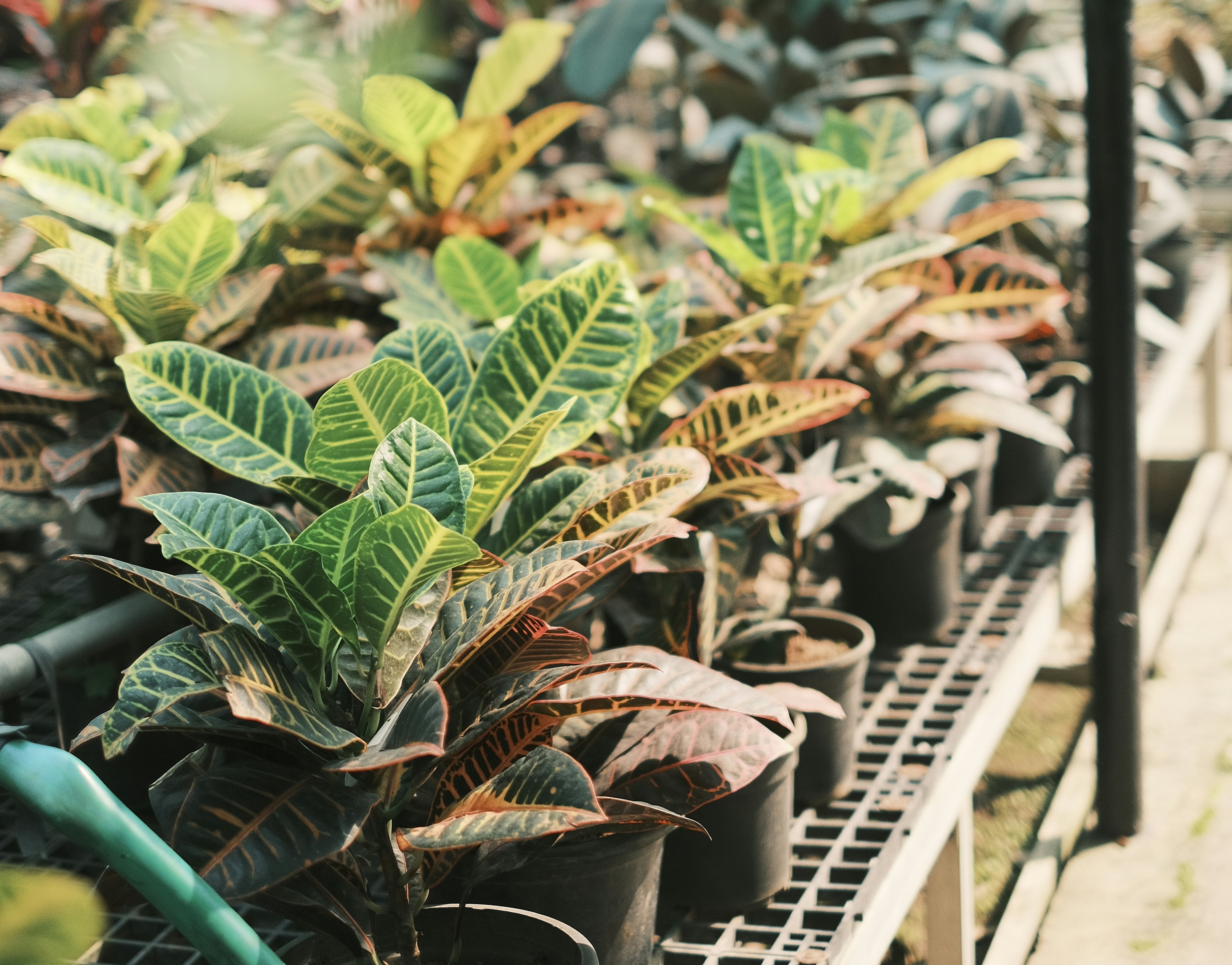
Commercial production prioritises speed and visual uniformity. Plants are grown in media designed for transit rather than for long-term indoor health, treated with systemic pesticides and growth regulators before shipping, and may have been in that condition for less than two weeks by the time they reach a garden center. The adjustment period when a new plant arrives home is normal: it has moved from controlled production conditions into a different light level, humidity, watering rhythm, and growing medium. That settling-in period is the plant adapting, not a sign that something is wrong.
Tissue culture, the laboratory propagation of plants from cells in a sterile medium, has transformed how rare varieties are produced and distributed. The Thai Constellation Monstera, 'Raven' ZZ plant, most Calatheas, and the majority of orchids sold today are tissue culture products. It reduces pressure on wild populations, makes rare varieties accessible, and produces clean, pathogen-free plants. The trade-off is that TC plants emerge from sterile conditions with no prior exposure to real soil microbiomes or environmental variation, making them somewhat more sensitive to stress initially than cutting-propagated specimens. This settles with time and is worth knowing when a new TC plant takes longer than expected to establish.
Most plant loss comes down to overwatering, insufficient light, the wrong growing medium, or buying a species without knowing what it needs. These are information problems and they are fixable. Overwatering is by far the most common: wet, oxygen-deprived soil allows anaerobic bacteria and fungi to colonize the root zone. The symptom, wilting and yellowing, looks identical to drought stress, which leads many people to water more and accelerate the decline. Checking moisture at depth rather than at the surface is the simplest correction.
Light requirements are consistently underestimated. Most houseplants are tropical species that evolved in considerably higher light levels than the average room provides. A care tag that says a plant tolerates low light usually means it will survive there, not grow or show its full characteristics. Variegated cultivars will often revert toward plain green as the plant compensates by producing more chlorophyll.
The growing medium a plant arrives in is rarely suited to long-term indoor care. Commercial mixes are designed for transit and retail display. They compact over time, lose aeration, and become water-repellent when they dry out. Repotting into an appropriate mix early on is one of the most useful things you can do for a new plant.
Environmental Considerations
The Environmental Picture
The houseplant industry's environmental footprint is largely invisible to the people buying at the end of it. Three things are worth understanding: what goes into the growing medium, what plants are treated with before they reach you, and what happens to the packaging they arrive in.
Peat is partially decomposed Sphagnum moss that accumulates in waterlogged conditions over thousands of years. Peat bogs cover approximately 3% of the earth's land surface but contain twice as much carbon as all the world's forests combined. A metre of peat takes roughly a thousand years to form. The horticultural industry extracts it at a rate that exceeds formation by orders of magnitude. In the UK, over 90% of lowland peat bogs have been degraded or destroyed. In Ireland, bogs that took ten thousand years to develop have been commercially extracted within a human lifetime.
Peat became the dominant growing medium because it is functionally excellent: sterile, consistent, moisture-retentive, slightly acidic, lightweight, and cheap. No single alternative replicates all of those properties simultaneously. Coir is the most direct structural substitute; professional growers have been reducing peat proportions for over a decade and many have eliminated it entirely. For home growers, peat-free mixes are not only achievable but often better: most houseplants grow more healthily in the aerated, chunky mixes that peat-free production favors.
Ornamental plants sit in a different regulatory category from food crops. The reasoning is that residues on a plant you are not eating are less directly relevant to human health. This is broadly true, but systemic insecticides, present throughout a plant's tissue rather than just on its surface, are standard in commercial ornamental production and do not dissipate immediately after purchase. This matters for pets that chew foliage, for the soil microbiome when you repot, and for pollinators if a treated plant is placed outdoors.
Neonicotinoids are the most widely used class: imidacloprid, clothianidin, thiamethoxam, acetamiprid. They make the entire plant toxic to insects that feed on it and remain active in plant tissue for months. The EU banned outdoor use of the most studied neonicotinoids in 2018; indoor ornamental use remains largely unregulated. Growth regulators are also standard, holding plants in a compact form that looks appealing at retail but changes once the treatment dissipates. This is the plant returning to its natural pattern, not a problem with care. Fungicides applied routinely in high-density facilities affect the soil microbiome and persist in potting media.
- Source from independent nurseries that can tell you what a plant has been treated with and when.
- Source from other growers. Cuttings from a propagation shelf have not been treated with commercial systemics.
- Repot on arrival into fresh medium. The old medium carries the most concentrated residue load.
- Keep new plants indoors for a full growing season before placing outside where pollinators can access them.
- Wipe leaves on arrival to remove foliar residues and supply chain dust.
Plastic nursery pots are polypropylene, theoretically recyclable but in practice rejected by most municipal programs: too thin, too small, too soil-contaminated to have a viable secondary market. Most go to landfill. The practical response is not to avoid buying plants in plastic pots but to return them. Most independent garden centers take them back for reuse. Many larger retailers now run take-back schemes. Cleaned pots reuse indefinitely for propagation and take up minimal space to store.
For permanent pots, unglazed terracotta is the most sustainable choice for most plants. It breathes, allowing soil to dry from the sides and reducing overwatering risk considerably. It is repairable, improves with age, and returns to earth. Glazed terracotta removes the breathability benefit and suits plants that need consistent moisture retention.
Indoor Environment & Seasonal Care
Keeping Plants Well
The conditions inside a home are shaped by architecture, heating systems, window orientation, and season in ways that affect plants as much as the care they receive. A plant in the right spot in the right room will thrive with relatively little effort. The same plant in the wrong microclimate will struggle regardless of how carefully it is watered. Understanding what your home actually provides, rather than relying on general care advice, is one of the more useful adjustments a plant owner can make.
Light
Most plant care advice is written from a Western European or North American temperate perspective without saying so. A north-facing window in that context means low, cool, indirect light, useful shorthand for readers in those climates but misleading for anyone closer to the equator, where a north-facing window may receive intense indirect light for most of the day and a south-facing window would scorch most houseplants outright. Latitude shapes everything about what a window actually provides, and care advice that does not acknowledge this is only partly useful.
Window orientation is the starting point but not the whole picture even within a single climate. A south-facing window at ground floor level surrounded by taller buildings may receive less usable light than a north-facing window on an upper floor with an open sky. Trees, overhangs, frosted glass, and net curtains all reduce light meaningfully. A free light meter app gives an accurate reading of what is actually reaching a plant's position in lux or foot-candles. Check the same spot in both summer and winter: a position that reads 500 lux in July may drop to 80 lux by December in a northern climate as the sun angle falls and day length shortens. The gap between those two numbers is where most winter plant problems originate.
Grow lights are worth considering for collections in genuinely low-light homes, for overwintering light-hungry tropical species through northern winters, or for anyone in a high-latitude climate where day length drops to 7 or 8 hours in winter. In those contexts, a grow light on a timer can be the difference between a plant that survives and one that actually grows through the dark months.
The environmental calculation is worth thinking through honestly. Running a grow light for 12 to 14 hours a day draws real electricity. A single full-spectrum LED panel at 30 to 45 watts running 13 hours daily uses roughly 15 to 18 kWh per month. For a collection of a few shelves lit by multiple panels, that adds up. In regions where the electricity grid runs primarily on renewables, the impact is relatively low. In regions still heavily dependent on fossil fuel generation, running a bank of grow lights year-round to maintain tropical species has a measurable carbon footprint that is worth factoring into the decision.
The more honest question is sometimes whether a grow light is compensating for a plant that is simply wrong for the environment it is in. A shade-tolerant species that suits a north-facing room in Edinburgh needs no supplemental light. A light-hungry aroid in the same room that needs 12 hours of bright indirect light to thrive is a different situation. Using a grow light to bridge a seasonal gap is different from using one to indefinitely maintain a plant in conditions it will never naturally receive.
When grow lights are the right choice, full-spectrum LED panels are the current best option: energy-efficient relative to older HID and fluorescent technologies, long-lasting, and effective across the light spectrum plants use. Most need to be within 30 to 60cm of foliage to deliver useful light levels. A timer set to 12 to 14 hours is the most reliable approach. Full-spectrum white LEDs are preferable to red-blue blurple panels for living spaces.
Temperature, humidity, and air movement
Radiators are one of the most overlooked plant stressors in temperate homes. Plants on windowsills often sit directly above them, cycling between cold glass drafts at night and dry heat during the day. Moving plants slightly away from both the glass and the heat source resolves a surprising number of chronic stress symptoms. Air conditioning creates the opposite problem: cold dry air directed onto foliage chills tropical species and drops local humidity sharply. Gentle air movement is beneficial for disease prevention; directed blasts of cold or warm air are not. Brief exposure to temperatures below 10°C causes irreversible cellular damage in most tropical species within 24 to 48 hours.
Centrally heated homes in winter often sit at 20 to 40% humidity. Most tropical species prefer 50 to 70%. Misting raises humidity at the leaf surface briefly then drops back to ambient within minutes, and on susceptible foliage encourages fungal issues. A small ultrasonic humidifier near a collection is far more effective. Grouping plants raises local humidity through collective transpiration. For the most sensitive species, a terrarium or glass enclosure creates a reliable microenvironment.
Seasonal care
Most plant care advice is written as if conditions stay the same year round. In a temperate climate they do not. The routine that works in July will overwater and overfeed plants if carried unchanged into December.
Most tropical houseplants slow or pause growth between October and February. Day length drops below the threshold many species need for active growth, and light arriving through windows in winter has less intensity than the same window in summer. A plant that was thriving in a bright spot in August may be receiving half the light by December from the same position.
Watering frequency should drop significantly, sometimes by half. Soil takes longer to dry, roots are not actively pulling moisture, and the risk of root rot peaks in cold, wet winter conditions. Check at depth before watering and err toward waiting another few days. Stop fertilizing from October through February for most species. Feeding a plant that is not growing pushes salts into the medium without the plant being able to use them. Resume in late February as light returns and new growth appears. Move plants closer to windows if possible and clean dust from leaves before winter to maximize available light.
Spring is the most active period for most houseplants and the best time for interventions that would stress a plant in other seasons. Repotting, dividing, propagating, and pruning are all best done in spring when the plant has the energy to recover quickly. From late February onward, watch for new growth as the signal that a plant has come out of dormancy and is ready for increased water and feeding. Reintroduce fertilizing gradually rather than jumping to full summer rates. Spring is also when pest populations begin to expand after overwintering at low levels; check undersides of leaves and growing tips carefully in March and April before infestations establish.
Summer brings the highest light levels and fastest growth, but also the most acute stress risks. Direct afternoon sun through south or west-facing glass can scorch tropical foliage rapidly. Most tropical houseplants prefer bright indirect light rather than direct sun, and in summer the intensity through unshaded glass in the afternoon exceeds what they evolved to handle. Watering frequency increases substantially, sometimes to every few days for fast-growing species in warm conditions. This is the season where underwatering becomes the more common problem. If leaves feel hot to the touch or show bleached patches, move the plant back from the glass or provide shading during peak afternoon hours.
Autumn is the transition period most growers underestimate. Light begins dropping noticeably from September, central heating turns on, humidity falls, and plants begin slowing down. Begin reducing watering and feeding in September rather than waiting until December to prevent the overwatering pattern that kills many plants over winter. Autumn is also a good time to check pots for rootbound conditions before plants go into winter. A rootbound plant in winter has less soil volume to buffer against overwatering and temperature fluctuation. Bring any plants that spent the summer outdoors back inside well before the first cold nights; a sudden drop below 10°C damages the cells of tropical species and causes leaf drop or collapse that takes months to recover from.
Pests & Disease
Managing Pests in an Indoor Collection
Indoor plant pests are near-universal in any collection of meaningful size, and it is worth saying so plainly, because a first infestation often arrives with a sense of failure attached to it that it does not deserve. The enclosed, climate-controlled conditions of a home are close to ideal for pest populations: there are no predators to speak of, warmth stays consistent through the year, and a collection concentrates a large number of host plants into a small space, so anything that gets in can move easily from one plant to the next. The same conditions that make a home comfortable for tropical foliage make it comfortable for the things that feed on that foliage.
The realistic goal is not elimination but management, keeping populations low enough that they do not meaningfully damage the plants, since sterilizing an indoor collection is neither possible nor necessary. Most infestations begin with a single new plant carried home from a nursery or a swap, already carrying eggs or adults that were easy to miss on the shelf. That makes prevention far easier than cure: quarantining every new plant somewhere separate for two to four weeks before it joins the rest of the collection is the single most effective measure available, and it costs nothing but patience. None of this requires exotic products either; most of what works is patience, close observation, and a few inexpensive staples. It helps to know how the gentlest of those staples actually work. Neem has two modes at once: its oil fraction smothers soft-bodied pests such as aphids, mites, and mealybugs on contact by blocking the pores they breathe through, while its active compound azadirachtin acts more slowly as an antifeedant and growth regulator that keeps immature insects from developing. That combination is why neem suits prevention and early infestations better than knocking down established adults, and why repeat applications are usually needed. The entries below cover the pests you are most likely to meet, how to recognize each one early, and how to treat it without reaching first for the harshest option.
Spider mites are arachnids rather than insects and are often invisible until populations are established. The first signs are stippling or bronzing of leaf surfaces and fine webbing at leaf axils and growing tips. They thrive in hot, dry conditions and are most problematic in winter when central heating reduces humidity, making humidity management both a treatment and a preventive. For active infestations, a strong water spray to dislodge mites followed by neem oil or insecticidal soap every five to seven days for three to four cycles is effective. Neem disrupts the lifecycle rather than just killing on contact, making it more effective than soap alone for established populations. Isolate affected plants immediately.
Thrips rasp at leaf surfaces to feed on cell contents. Damage appears as silvery streaking, scarring, or distorted new growth, with black faecal deposits visible on affected surfaces. They are hard to eradicate because they pupate in the soil as well as living on leaves, meaning foliar treatment alone leaves the soil population intact. Effective treatment requires addressing both simultaneously. Spinosad, derived from soil bacteria, is among the most effective treatments and can be applied as both a foliar spray and a soil drench. Repeat every five to seven days for at least four cycles. Yellow sticky traps help monitor population levels. Isolation is essential as thrips spread quickly.
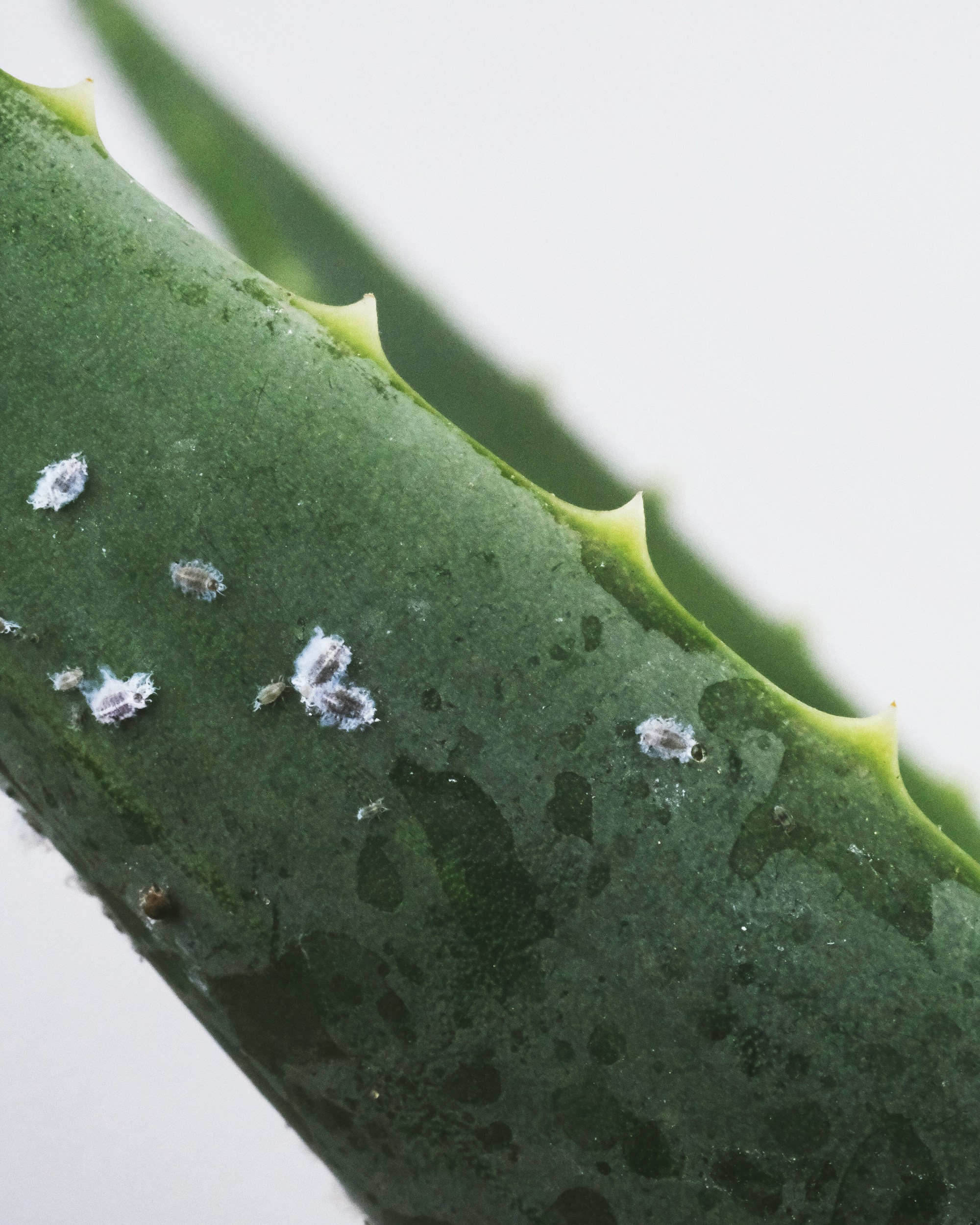
Mealybugs appear as white cottony masses in leaf axils, along stems, and on root systems. They excrete honeydew which encourages sooty mold. Root mealybugs live below the soil line and are often only discovered at repotting. For above-ground populations, a cotton swab dipped in isopropyl alcohol kills on contact and suits light infestations. For heavier infestations, neem oil applied thoroughly into all leaf axils and stem crevices every seven days disrupts reproduction. For root mealybugs, wash all growing medium from the roots, remove visible insects, and repot into fresh medium. A monthly neem soil drench works well as a preventive in collections with a history of the pest.
Scale insects appear as small brown, tan, or white bumps fixed to stems and leaf undersides, often mistaken for part of the plant until an infestation is established. Soft scale produces honeydew and sooty mold; armoured scale has a harder coating that makes contact insecticides less effective. Manual removal with a soft brush or cloth dipped in isopropyl alcohol is necessary as a first step, since the waxy coating repels sprays. Follow with neem or horticultural oil applications to the entire plant surface weekly for at least a month. Scale populations expand slowly but established infestations are correspondingly harder to clear.
Fungus gnat larvae live in moist potting media and feed on fungal matter and organic material; at high densities they damage fine root hairs. The adults are primarily a nuisance but larval feeding can stress seedlings and young cuttings. They are most common in peat-heavy, moisture-retentive media that stays consistently damp. The most effective long-term solution is cultural: allowing the top layer of growing medium to dry out between waterings removes the environment the larvae need. Peat-free mixes reduce populations substantially. For active infestations, Bacillus thuringiensis israelensis (Bti), sold as mosquito dunks, is applied as a soil drench and kills larvae without affecting plants or beneficial organisms. Bottom watering keeps the top layer dry and reduces gnat habitat.
Root rot is almost always caused by overwatering and poor drainage rather than a pathogen alone. Phytophthora and Pythium exploit roots already stressed by anaerobic conditions. Treatment requires removing the plant, cutting away all blackened or soft roots, and repotting into fresh well-draining medium. Severely affected plants often do not recover, but cuttings taken from healthy stem tissue above the soil line can be propagated as salvage.
Powdery mildew appears as a white powdery coating on leaf surfaces, most common on Begonia, Kalanchoe, and certain succulents. It thrives in high humidity combined with poor air circulation. Improving airflow, removing affected leaves, and applying diluted potassium bicarbonate or neem oil to affected surfaces reduces spread.
Bacterial leaf spot presents as water-soaked lesions that expand and turn brown or black, often with a yellow halo. It spreads through water splash and worsens in warm, humid conditions. Removing affected leaves, avoiding wetting foliage when watering, and improving air circulation are the primary management strategies indoors.
Propagation
Propagation as Practice
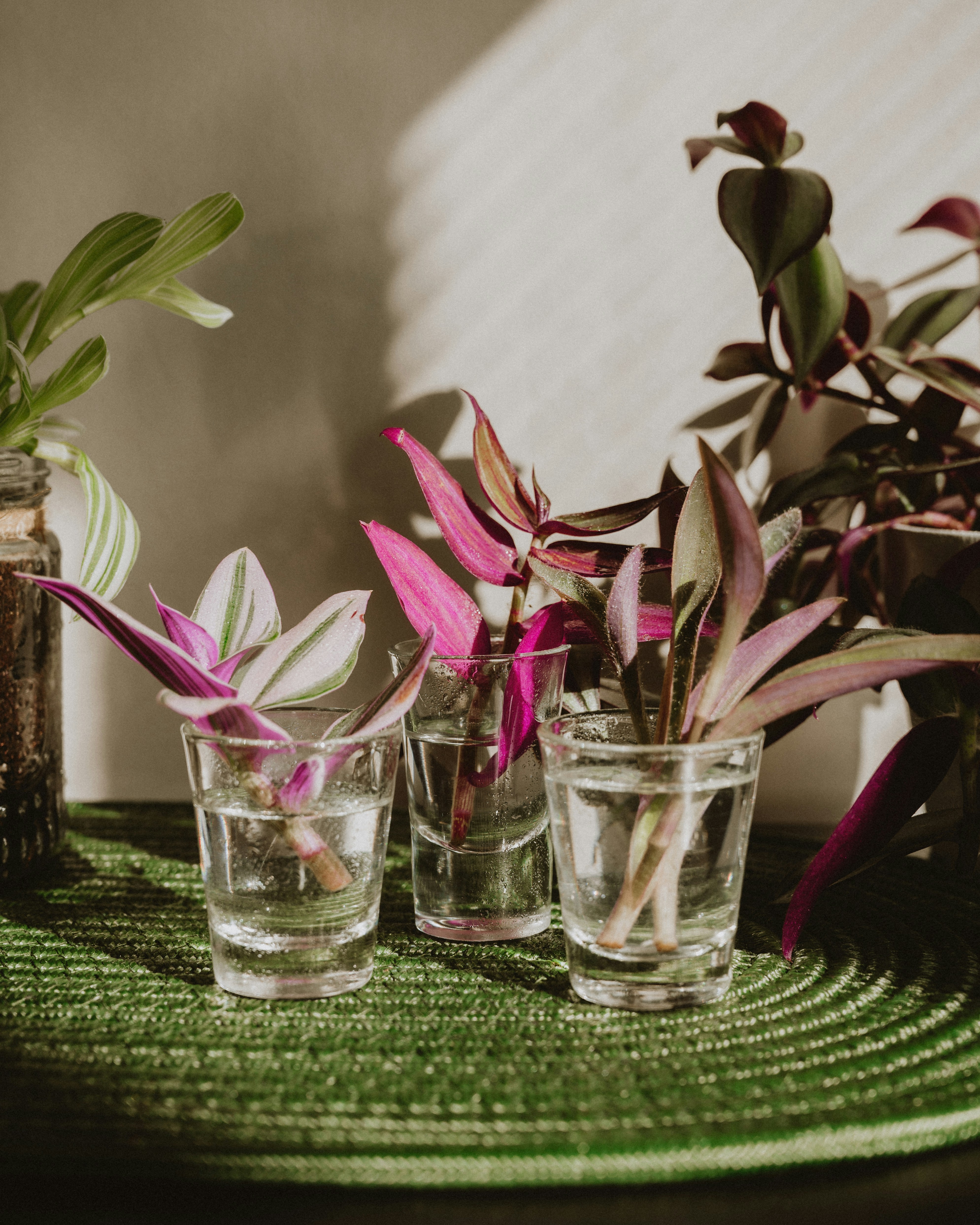
Propagating from cuttings, division, or offsets reduces the need to buy plants, lets you share them within a community without packaging or shipping, and builds a practical understanding of how plants actually grow that reading about them does not fully replicate. It is also one of the few parts of plant keeping that turns a hobby from a stream of purchases into something closer to a cycle, where the plants you already own quietly produce the next ones. For many growers it becomes the most satisfying part of the whole pursuit, less because it saves money, though it does, and more because watching a bare cutting put out its first white root is a small, repeatable pleasure that does not seem to wear off.
There is a useful coincidence at the center of it: many of the plants most commonly bought, killed, and replaced are the same plants that will multiply almost indefinitely with very little effort. A mature Epipremnum aureum can yield dozens of rooted cuttings in a single year, and a Chlorophytum comosum produces plantlets on runners more or less continuously, so a household that learns to root them need rarely buy either again. The skills involved are simple and transfer widely once learned, and the failures are cheap, since a cutting that does not take has cost nothing but a length of stem. For the easy multipliers a cutting in plain water is all it takes, but woodier or more reluctant species root far better with a rooting hormone, whose active ingredient is usually indole-3-butyric acid, an auxin that is the standard commercial aid for inducing roots; the one rule is that more is not better, since too high a dose can suppress rooting rather than encourage it. None of it needs a greenhouse or special equipment, only a windowsill, a jar or a spare pot, and a little time. The material here treats propagation as a normal, ongoing part of keeping plants rather than an occasional experiment.
The encyclopaedia includes propagation detail for every species: method, medium, timing, and the things that commonly go wrong and why. The goal is to make propagation a normal part of keeping plants rather than an occasional experiment.
Growing Media, Feeding & Repotting
What Plants Actually Grow In
The growing medium, how it is fed, and when it is replaced have more effect on long-term plant health than most other care decisions combined. The medium a plant arrives in from a nursery is designed for transit and retail, not for a home environment. Getting this right early, and understanding the inputs that go into it, is where the most meaningful gains are.
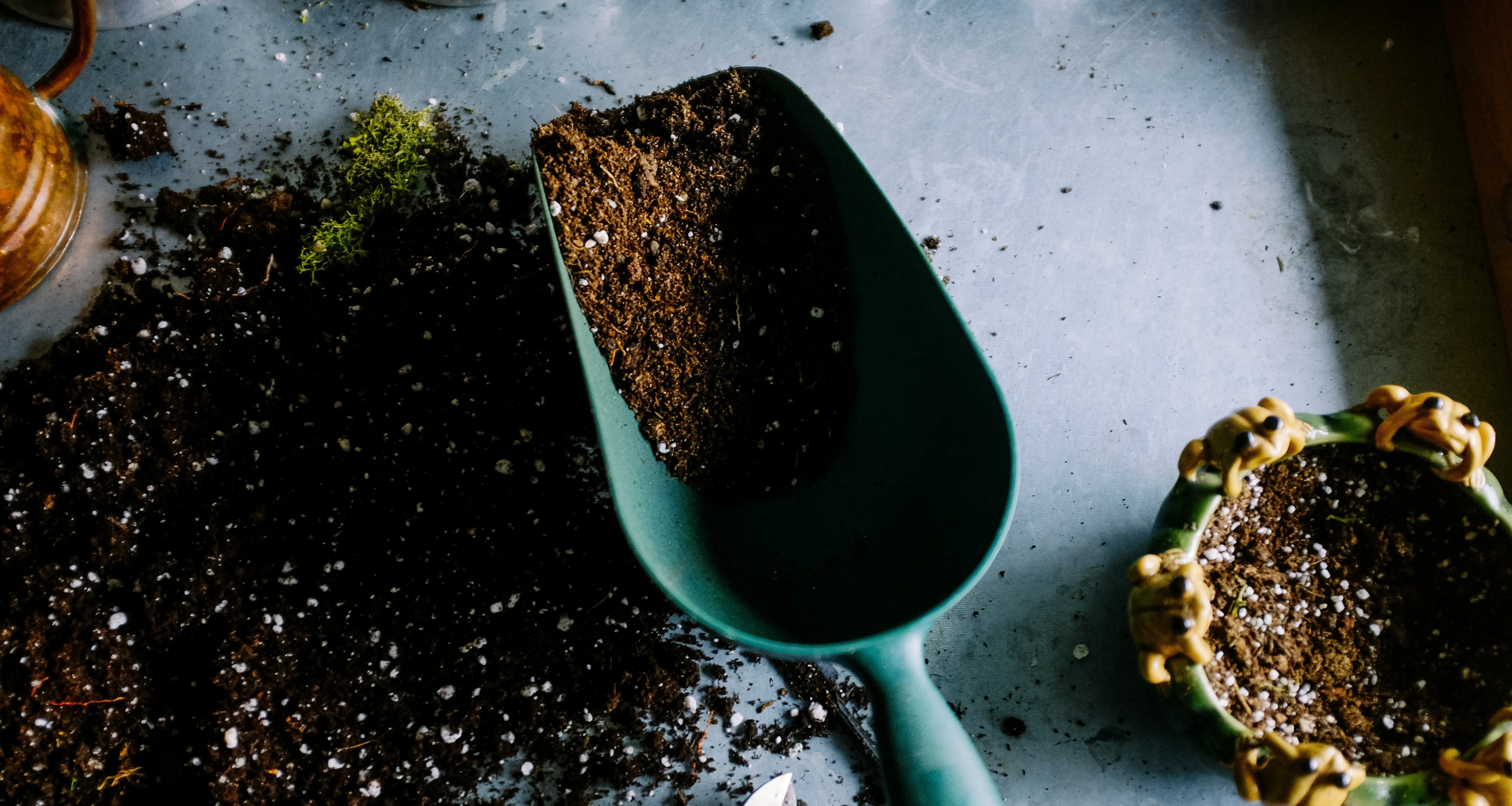
Building a peat-free mix
- Coir is the most direct peat substitute: similar water retention and texture, available as compressed bricks. Choose certified sustainable sources over pre-bagged plastic versions.
- Orchid or fir bark provides aeration and mimics the epiphytic conditions most tropical houseplants evolved in. Fine bark for smaller or moisture-sensitive roots, medium for aroids, coarse for large specimens.
- Perlite adds aeration and drainage without retaining moisture. Lasts indefinitely in a mix. Avoid breathing the dust.
- Biochar improves structure, supports microbial communities, and sequesters carbon stably.
- Worm castings at 10 to 20% provide slow-release nutrition without the salt accumulation of synthetic feeds.
A basic all-purpose peat-free mix: 40% coir, 30% bark, 20% perlite, 10% worm castings. Adjust per species: more bark and perlite for aroids, more coir for ferns and moisture-lovers, more mineral content for cacti and succulents.
Feeding without the drawbacks
Synthetic fertilizers deliver nutrients quickly but cause salt accumulation in the root zone with repeated use and pass directly into wastewater when pots drain. Biological alternatives work more slowly but work with the soil rather than around it.
- Worm castings top-dressed monthly provide slow-release nutrition without salt accumulation and introduce beneficial microbial communities. A tablespoon per 6-inch pot during the growing season is sufficient.
- Compost tea, water steeped with finished compost for 24 to 48 hours, delivers soluble nutrients and a broad range of microorganisms.
- Diluted fish emulsion provides a broader micronutrient spectrum than synthetic NPK. The smell dissipates within a day.
- Aquarium water from freshwater tanks contains dissolved nitrates and phosphates at useful concentrations. One of the most genuinely zero-waste feeding options available.
Water quality
Chlorine dissipates from water left uncovered overnight. Chloramine, increasingly common as it lasts longer, does not and requires filtration to remove. Both affect soil microbial communities over time. Fluoride accumulates in plant tissue with repeated watering and causes the persistent brown leaf tips common in spider plants, Dracaena, and peace lilies. Standing water overnight does not remove it. For sensitive species, rainwater or filtered water is the practical solution. Hard water gradually raises the pH of the growing medium, reducing the availability of micronutrients. The white crust that builds on potting media in hard water areas is the visible result. Periodic deep flushing or switching to rainwater prevents it accumulating to a level that affects plant health.
Repotting
The clearest signs a plant needs repotting: roots growing through drainage holes, circling at the surface, or a plant that dries out within a day or two of watering despite consistent care. Spring is the best time for most species, giving a full growing season to establish in new medium. Not all plants want to be repotted regularly: Dracaena trifasciata, ZZ plants, and orchids prefer being quite root bound and should be left until the signs above are clear.
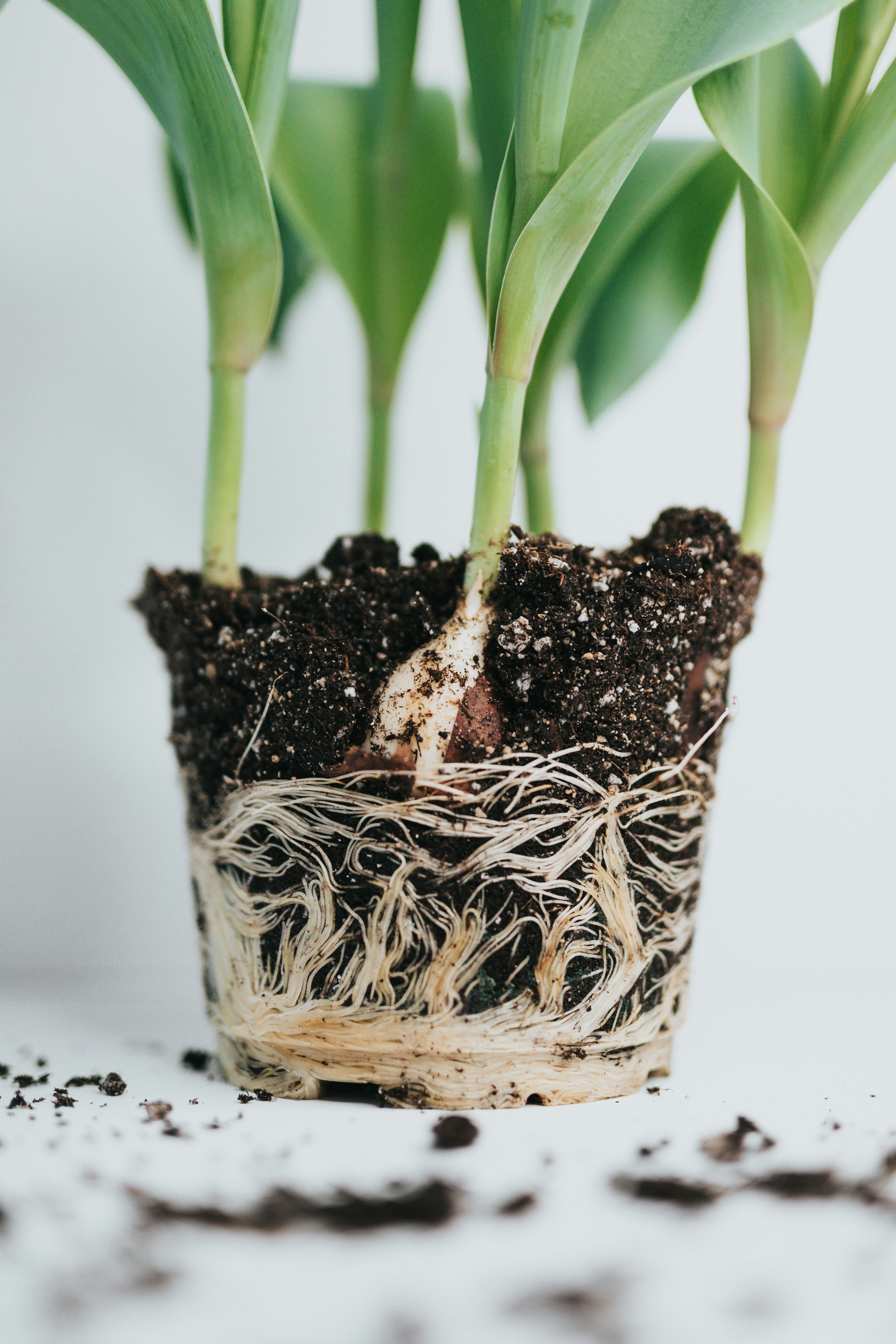
Go up one pot size at a time, typically 2 to 5cm larger in diameter. A pot too large for the root system holds more moisture than the roots can take up, creating persistently wet conditions regardless of how carefully you water. Water the plant a day before repotting. Remove from its pot, loosen the root ball, shake off old medium, and remove any dead or blackened roots. Position in the new pot at the same stem height and fill with fresh medium. Water in fully and drain. Keep in stable moderate conditions for two to four weeks while it settles, without fertilizer and away from direct sun.
Tools Worth Having
What Is Actually Worth Buying
The plant care market is full of products aimed at new plant owners, many of which are unnecessary or marketed well beyond what they deliver. A few things genuinely make a difference.
- A light meter app. Free on any smartphone. Measures in lux or foot-candles and gives an accurate reading of what a plant is actually receiving in a given spot. More useful than any general advice about window orientation. Check the same spot in summer and winter.
- A humidity gauge. Small and inexpensive. Tells you what ambient humidity in your plant space actually is rather than what you assume. Particularly useful in winter when central heating runs.
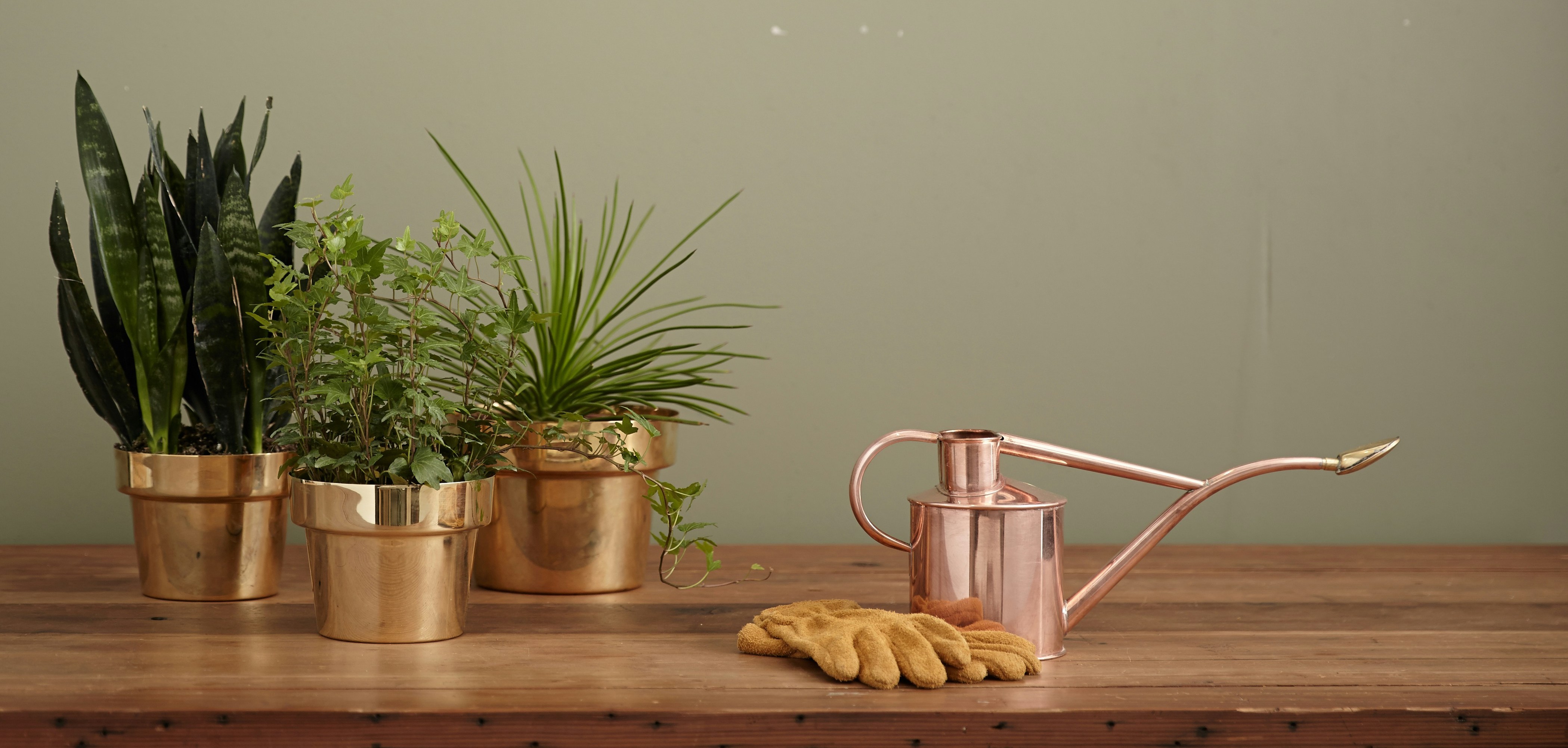
- A watering can with a long narrow spout. Allows precise watering to the base of the plant rather than over foliage, which reduces fungal issues and allows more controlled watering in dense collections.
- Yellow sticky traps. Inexpensive pest monitoring tools that catch flying insects including fungus gnat adults, whitefly, and thrips. Useful for detecting infestations early in dense collections.
- Sharp, clean pruning scissors. Clean cuts heal faster and introduce less disease risk than torn stems. Clean with isopropyl alcohol between plants when taking cuttings.
- Moisture meters. The inexpensive probe-type meters sold for houseplants measure electrical conductivity rather than true moisture content. Mineral buildup in growing medium skews the reading, often giving the opposite of the actual condition. Lifting the pot and feeling its weight, or pushing a finger into the medium, is more accurate and costs nothing.
- Leaf shine products. Block stomata, reduce plant function, and produce a temporarily appealing appearance. A damp cloth wipe does the same cosmetic job without the downsides.
- Plant vitamins and boosters. A large category with no meaningful evidence base. A balanced growing medium and appropriate light eliminates the need for most of what these products claim to provide.
- Decorative pebble top dressings. Sold as humidity raisers, which they are not at any meaningful level. They can trap moisture at the surface and encourage fungus gnats.
- Self-watering spike reservoirs. Deliver water based on capillary action rather than plant need, often keeping growing medium consistently moist in a way that suits very few houseplants.
Sourcing & Community
Where to Get Plants and Who to Get Them From
The plant swap and collector community is one of the most underused resources available to any plant owner, and one of the most environmentally sound ways to build a collection. Cuttings change hands with no packaging, no shipping, no commercial growing infrastructure. Common species that cost several pounds in a nursery are available for free or near free from someone's propagation shelf. Rare species circulate at far lower cost once they have moved through enough hands to be in multiple collections. There is also a knowledge dimension to community sourcing that retail cannot replicate: a cutting from someone who has grown the parent plant for years comes with direct experience of what it needs.
- Local Facebook groups are often the most active local community. Search your city or region alongside "plant swap" or "plant trade." These range from informal cutting exchanges to organized events at local venues.
- Reddit communities including r/TakeaPlantLeaveaPlant, r/RareHouseplants, and genus-specific subreddits facilitate trades both locally and internationally, with deep species-specific knowledge.
- Instagram collector accounts often document collections publicly and are open to trades, particularly for species they do not have. Engaging over time builds access to plants not available through retail.
- Organized swap events run regularly in many cities, bringing large numbers of collectors together. Good for common species and for meeting people with specialist knowledge of specific genera.
- Independent specialist nurseries run by collectors rather than commercial growers often stock species unavailable at retail and can speak to provenance and care from direct experience.
The rare plant market has expanded considerably with social media, creating conditions where misrepresentation, transit damage, and wild-collected stock are more common than they should be. Wild collection is a real conservation concern for certain species: Haworthia truncata, several Anthurium species, various Hoya, and many orchids are still taken from wild populations when propagated supply cannot meet the price the market will pay. Wild-sourced plants are rarely labelled as such.
- Buy from growers, not resellers, where possible. A grower can tell you the parent plant, the propagation method, and the growing conditions. A reseller typically cannot.
- Prefer tissue culture for rare species. TC puts no pressure on wild populations and produces clean, pathogen-free plants.
- Be skeptical of suspiciously cheap rare plants. A Monstera obliqua at a price that seems too good to be true almost certainly is: either misidentified or sourced in a way that does not bear scrutiny.
- Check CITES listings before importing. Orchids in particular are almost universally covered by CITES, requiring permits for legal import and export. Many collectors are unaware that a plant ordered internationally may require documentation neither they nor the seller possesses.
- Return nursery pots. Most independent garden centers take them back for reuse. Offering cleaned pots at a swap event means they are taken immediately.